UNIT 4222-265 Causes and Spread of infection ICO2 1 Infections are the result of the bodys inability to fight off microorganisms that can cause damage or disease if they are left untreated. Similar in meaning as contagious Used to describe diseases that can be spread or transmitted from one person to another.

Social Media Life Cycle Infographic Everyth Social Media Infographic Social Media Strategies Social Media Marketing
An infection may cause no symptoms and be subclinical or it may cause symptoms and be clinically apparent.
. To affect a person organism etc with a disease-causing organism. This site includes an overview of how infections spread ways to prevent the spread of infections and more detailed recommendations by type of healthcare setting. Comprehensive list of synonyms for words used to describe illnesses diseases and medical conditions.
Community spread The spread of an illness within a particular location like a neighborhood or town. Many illnesses spread through contact transmission. Despite the variety of viruses and bacteria germs spread from person to person through a common series of events.
In epidemiology infections that spread at the expense of their host harming or even killing it in the process are said to be virulent. Infected dust particles containing skin scales may cause a respiratory virus. Sanitizing could be done by either cleaning disinfecting or both.
Heres a list of similar words from our thesaurus that you can use instead. This includes giving a kiss or a hug a handshake or a high five or even just a brush up against someone. Examples are chicken pox common cold conjunctivitis Pink Eye Hepatitis A and B herpes simplex cold sores influenza measles mononucleosis Fifth disease pertussis adenorhino viruses Neisseria meningitidis and mycoplasma pneumoniae.
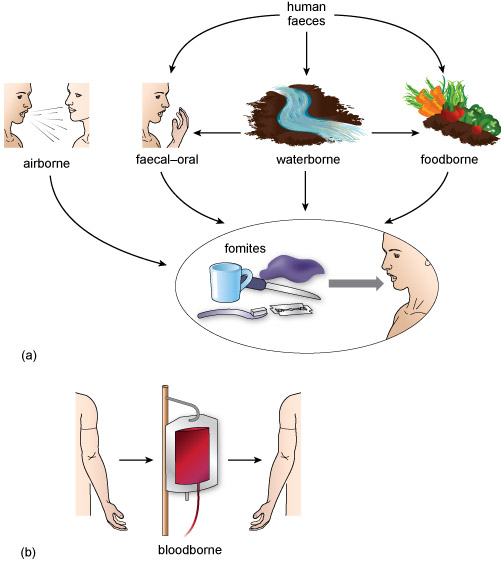
Therefore to prevent germs from infecting more people we must break the chain of infection. Unknown Microorganism X from the infected rabbits right ear is successfully isolated and cultured on laboratory growth media. Airborne inhalation of pathogens microorganism disease producing agent such as bacteria virus.
During community spread theres no clear source of contact or infection. Infection control is a health and safety issue. There are four main ways that direct contact occurs.
What word describes the removal of faeces and waste from a building. Other infections like chickenpox cold sores and HIV can be passed on by kissing touching and sexual intercourse. This may be from a nebuliser.
A way germs are moved to the susceptible person. Places where infectious agents germs live eg sinks surfaces human skin Transmission. Disinfecting does not necessarily clean dirty surfaces or remove germs.
Infections like ringworm are spread when children play together and the infected area of a child is touched by another. An infection occurs when germs enter the body increase in number and cause a reaction of the body. Medical an opportunistic disease or infection is one that attacks people who are already ill and who have a very weak immune system.
Successful infection prevention and control measures involve. The two-tiered approach of standard and transmission-based precautions provides a high level of protection to patients healthcare workers and other people in healthcare settings. Infectious agents transmitted during provision of health care come primarily from human sources including patients clinicians and visitors.
This may be from a nebuliser. Airborne inhalation of pathogens microorganism disease producing agent such as bacteria virus. Systemic infection is when the infection caused by a pathogen spread through the body to several organs in different systems of the body such as digestive system respiratory system or circulatory system.
Person to Person Contact. UNIT 4222-265 Causes and Spread of infection ICO2 1 Infections are the result of the bodys inability to fight off microorganisms that can cause damage or disease if they are left untreated. Over 11000 people died in the Ebola outbreak in West Africa in 2013 Over 20000 people died.
What illnesses spread this way. The common cold and flu spread the infection to another person either sneezing into the air nasal droplets. The invasion and multiplication of microorganisms such as bacteria viruses and parasites that are not normally present within the body.
Infection prevention and control uses a risk management approach to minimise or prevent the transmission of infection. Infection control prevents or stops the spread of infections in healthcare settings. Infected dust particles containing skin scales may cause a respiratory virus.
Sanitizing means that you are lowering the number of germs to a safe level. You usually need to leave the disinfectant on the surfaces and objects for a certain period of time to kill the germs. No matter the germ there are six points at which the chain can be broken and a germ can be stopped from infecting another person.
The most virulent stage of an infection usually corresponds to the period of highest transmissibility for obvious reasons it does the pathogen no good to risk killing off its host unless doing so helps it spread to new hosts. They can be viral or bacterial in nature and might be caused by a. An epidemic is a significant often sudden increase in the number of cases of an infectious disease that rises above whats usually expected for a population in a certain geographic area.
All people working in the health service organisation are responsible for providing a safe environment for consumers and the workforce. Its etiology cause is unknown. Direct contact means that infections are passed on from one person to another when their bodies touch.
The common cold and flu spread the infection to another person either sneezing into the air nasal droplets. An infection may remain localized or it may spread through the blood or lymphatic vessels to become. A non-invasive illness does not spread to other parts of your body.
A rabbit was found to have floppy ear disease which causes long-ear infections. Infectious diseases can be transmitted from person to person through touch. The first way that infection can spread is through direct contact.
They can be viral or bacterial in nature and might be caused by a.

Modes Of Disease Transmission Microbiology
Infection And Immunity Openlearn Open University

What Is Cellulitis Subcutaneous Tissue Aquaponics Bacterial Infection


0 Comments